Why Wire-O Booklet Binding Works for Professional Booklets
When I started working with custom booklets for local businesses and organizations here in Lancaster, I quickly learned that the binding method often makes or breaks the final product. A well-designed cover and crisp interior mean little if the pages don't lay flat or the spine cracks after a few opens. Over years of handling hundreds of print jobs, I have come to rely on Wire-O booklet binding for projects where durability and a professional open-flat layout matter most.
Wire-O binding, sometimes called twin-loop binding, uses a metal spine with multiple wire loops that pass through rectangular holes punched along the edge of the pages. The result is a book that opens completely flat, stays open without holding, and allows for easy page turning. It is not the only option out there, but for many of the marketing materials and event programs I produce through Lancaster printing services, it is the right choice.
What Makes Wire-O Binding Different
To understand where Wire-O booklet binding fits, it helps to compare it with other common binding methods. Saddle stitching, where staples go through the fold of a booklet, works well for thin publications of up to about forty pages. But it does not allow the booklet to lie flat, and the staples can rust or loosen over time. Perfect binding, which uses glue to hold the pages together at the spine, gives a clean, square spine that looks great on a shelf, but the pages do not open flat, and the glue can crack with heavy use.
Spiral coil binding, another popular choice, uses a continuous plastic coil that winds through the holes. It is flexible and durable, but the coil can sometimes catch on fabric or paper edges, and it does not always offer the same crisp, professional look that corporate clients expect. Wire-O binding, by contrast, uses rigid metal loops that snap into place. The spine is sturdy, the pages turn smoothly, and the booklet stays open flat on a desk or podium. For training manuals that need to be referenced quickly or portfolio presentation books that need to impress, this is a clear advantage.
Where Wire-O Booklet Binding Excels
In my experience, the most common use for Wire-O booklet binding is in professional services. A law firm might produce a capabilities brochure that needs to sit open during a client meeting. An architectural firm might create a portfolio of recent projects that must lie flat for easy viewing. Event programs for conferences and galas also benefit from Wire-O binding because they can be printed on heavier paper stock and still open fully without stressing the spine.

Marketing materials such as product catalogs and sales sheets often use Wire-O binding as well. The ability to add or remove pages by simply opening the wire loops makes it ideal for content that gets updated regularly. A catalog of product offerings, for instance, might need a new page inserted every quarter. With Wire-O binding, you can do that without reprinting the entire booklet. That saves money and reduces waste.
Training manuals are another strong candidate. I have worked with several Lancaster-based organizations that produce employee handbooks and procedural guides. These manuals get handled daily, bent back, and stuffed into bags. Wire-O binding holds up far better than saddle stitching in those conditions. The metal spine does not break, and the pages do not tear out as easily as they can with a glued perfect bind.
Practical Considerations for Your Project
Choosing the right binding starts with understanding your page count and paper stock. Wire-O booklet binding works best for booklets with a page count between about eight and one hundred twenty pages. Below eight pages, saddle stitching is usually more economical. Above one hundred twenty, the thickness of the paper stack can make the wire loops strain, and perfect binding or even a sewn binding might be more appropriate.
Paper stock also matters. If you use a thick, heavy cover with a laminated cover, the binding machine needs to punch through that extra thickness cleanly. A good commercial printer will test the paper stack before running the job to make sure the holes align and the wire loops fit snugly. Digital printing and offset printing both work well with Wire-O binding, but offset printing often gives a sharper result on large runs because the ink lays down more consistently.
One detail that often surprises clients is the importance of the binding spines. Wire-O spines come in different diameters, measured in millimeters, and the correct size depends on the total thickness of your booklet. A spine that is too small will not close properly, and a spine that is too large will leave the booklet loose. A reliable Lancaster printing service will measure the spine thickness for you and order the right size. That kind of local support can save you a lot of headaches.
Some projects also call for a die-cut cover, where a window or shape is cut out of the front cover to reveal a design or image underneath. That works fine with Wire-O binding, but the die-cut area should be kept away from the binding edge so the punch does not distort the cut. A good designer will account for that in the layout.
Comparing Wire-O to Other Methods
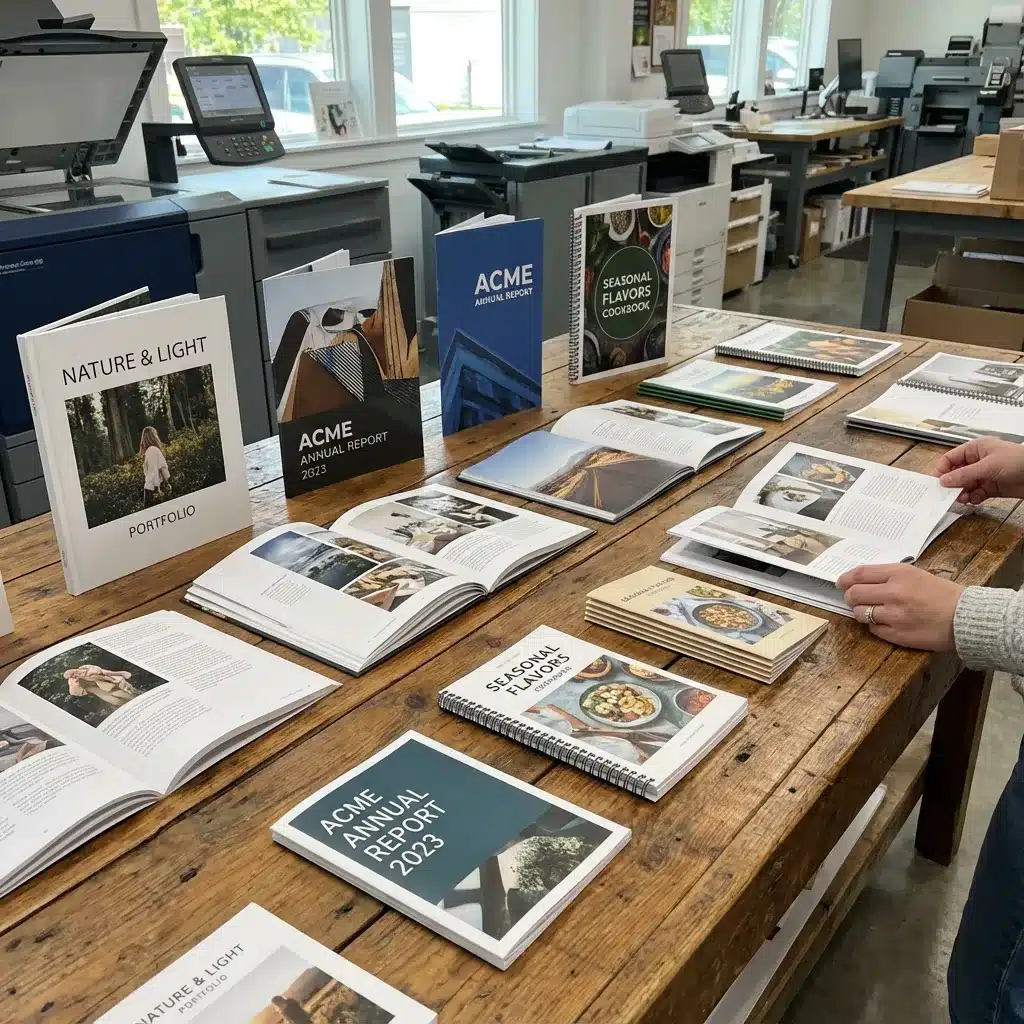
I often get asked how Wire-O binding compares to spiral coil binding, especially for personal projects like cookbooks or journals. Spiral coil binding is certainly more flexible, and it allows the pages to rotate a full three hundred sixty degrees. But for a professional booklet that needs to look sharp in a meeting, Wire-O binding has a cleaner, more formal appearance. The metal spine can also be color-matched to the cover, which adds a nice custom touch.
Saddle stitching remains the cheapest option for short booklets, but it does not offer the same durability or flat-lay capability. Perfect binding gives a premium look on the shelf, but the pages do not open flat, which can be frustrating for a reader who wants to take notes. Wire-O booklet binding splits the difference: it looks professional, opens flat, and holds up to repeated use.
For portfolio presentation, I have seen many artists and designers choose Wire-O binding because it allows them to show two-page spreads without the gutter disappearing into the spine. That is especially important for photography books, architectural plans, and graphic design portfolios where the image spans both pages.
What to Look for in a Printing Partner
If you decide that Wire-O booklet binding is right for your project, the next step is finding a printer who can execute it well. Not all print shops have a binding machine that handles Wire-O, and even those that do may not have experience with larger runs or unusual paper stocks. Look for a provider that offers both digital printing and offset printing, so you can match the print method to your quantity and quality needs.
Local support matters too. I have worked with several printers outside of Lancaster, and the turnaround time and communication always suffer when you cannot visit the shop or speak to the same person each time. A local Lancaster printing service that specializes in custom booklet printing can walk you through the choices, show you samples, and help you avoid common mistakes. That kind of hands-on service is hard to get from a large online print broker.
Finally, ask about the high-quality finish options. A laminated cover adds protection and a nice tactile feel. A matte laminate reduces glare, while a glossy laminate makes colors pop. You can also choose a soft-touch laminate that feels velvet-smooth. These finishes pair well with Wire-O binding because the spine itself is metal and does not interfere with the cover treatment.

Final Thoughts
Wire-O booklet binding is not the right choice for every project, but it is a versatile and reliable option for many of the booklets I produce through Lancaster printing services. It offers a professional look, excellent durability, and the practical advantage of opening flat. Whether you are creating event programs, training manuals, portfolio presentation books, or marketing materials, it is worth considering. The key is to match the binding to your content, your page count, and your budget, and to work with a printer who understands the details.
If you are planning a custom booklet and want to explore binding options, I recommend starting with a clear idea of how the booklet will be used. A training manual that will sit on a desk and get referenced daily has different needs than a one-time event program. Wire-O booklet binding handles both well, but the spine size, paper stock, and cover finish should all be chosen with the end use in mind. With the right choices, your booklet will not only look good but also hold up under real use.